
Best Trading Sessions for Gold (XAUUSD) on MT5: Timing and Volatility Explained
Learn how major trading sessions can affect Gold (XAUUSD) activity on MT5, including volatility, session overlaps, broker trading hours, and considerations for automated Gold trading.
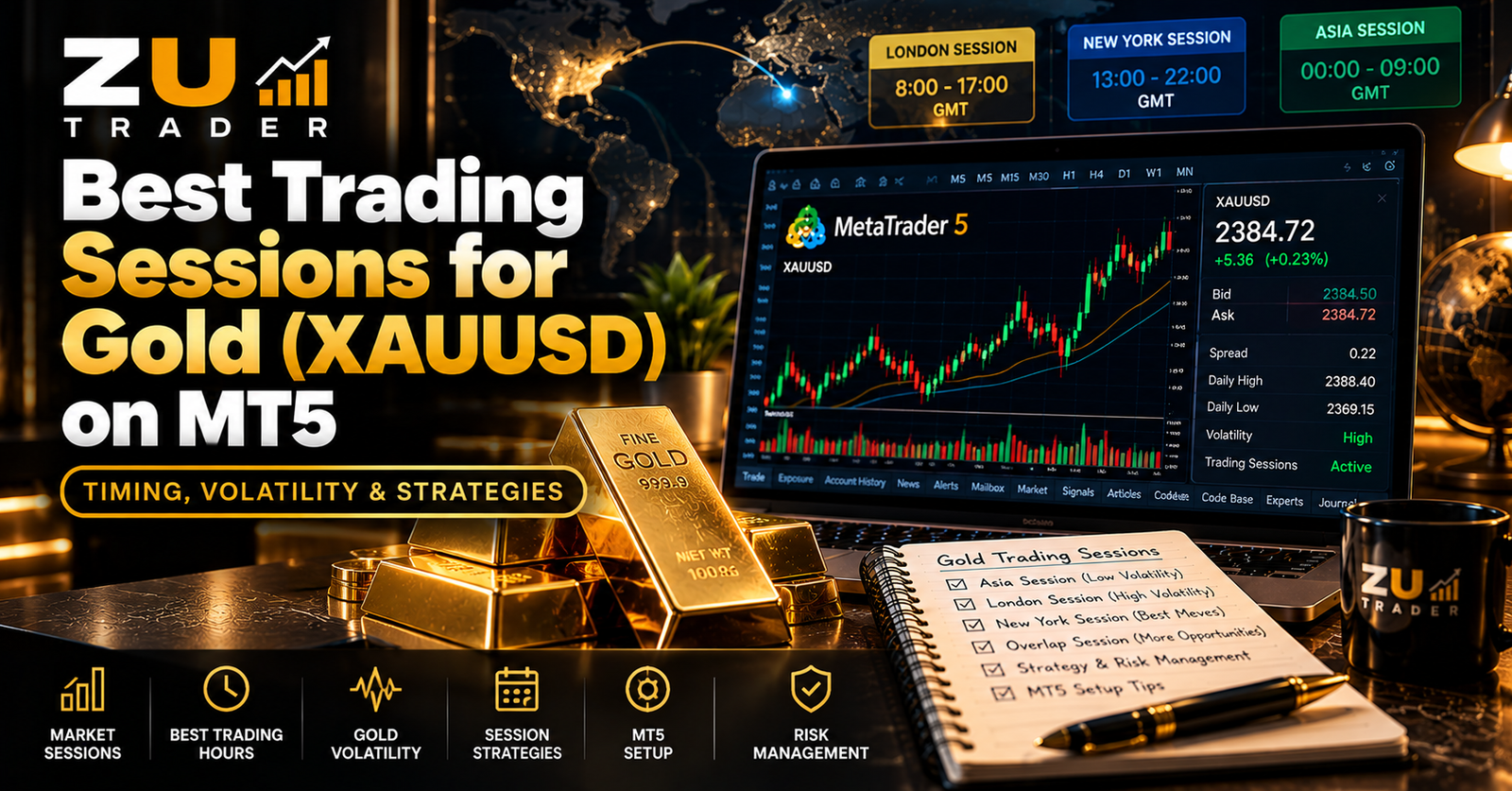
Gold trades across a global market, but market activity is not necessarily identical throughout every part of the trading day.
Different financial centers become active at different times, market participation changes, and periods of overlapping activity can influence liquidity and volatility.
For traders using MetaTrader 5 and automated Gold trading systems, understanding trading sessions can help explain why XAUUSD may behave differently throughout the day.
This guide explains the major trading sessions, session overlaps, volatility considerations, broker-time differences, and how trading hours can affect an automated Gold Expert Advisor.
What Are Trading Sessions?
Global financial markets operate across different geographic regions.
The major sessions are commonly associated with:
- Asia
- London
- New York
These sessions overlap at certain points, creating periods when multiple major financial centers are active.
Gold can trade across these periods, but activity and volatility can vary.
There is no single session that is guaranteed to provide better trading results.
The appropriate trading period depends on the strategy, market conditions, broker environment, and risk controls being used.
Why Trading Sessions Matter for Gold
Gold prices can react to a wide range of market factors.
During different periods of the day, market participation and price movement can change.
This can affect characteristics such as:
- Volatility
- Spread
- Liquidity
- Trade frequency
- Speed of price movement
- Breakout behavior
- Trend development
An automated strategy designed around certain market conditions may therefore behave differently across trading sessions.
The Asian Trading Session
The Asian session represents the period when major financial markets in the Asia-Pacific region are active.
Gold can trade during this period, although market behavior may differ from later sessions.
Depending on the day and broader market conditions, some periods may experience comparatively quieter price movement while others can still produce significant volatility.
It is important not to assume that the Asian session is always quiet.
Unexpected economic or geopolitical developments can affect Gold at any time.
The London Trading Session
London is an important global financial center, and its trading session can bring increased market participation.
As European markets become active, XAUUSD may experience changes in:
- Liquidity
- Volatility
- Directional movement
- Trading volume
For some automated strategies, these changing conditions may produce more trading signals.
However, more activity does not automatically mean better performance.
Higher volatility can increase both opportunity and risk.
The New York Trading Session
The New York session is another important period for Gold markets.
Gold is closely followed alongside U.S. financial markets, and this period can include significant economic activity.
Price movement can be influenced by changing market expectations and scheduled economic information.
An automated trading strategy operating during this period should be able to manage the possibility of faster market movement.
London and New York Session Overlap
One widely observed period occurs when London and New York trading activity overlaps.
During an overlap, participation from multiple major financial centers can be active simultaneously.
This can contribute to:
- Increased liquidity
- Faster price movement
- Higher volatility
- More frequent market changes
These characteristics may be relevant for some automated strategies.
However, higher volatility can also increase:
- Slippage
- Spread changes
- Stop-loss activity
- Position risk
A strategy should therefore be evaluated for both potential opportunity and risk during active periods.
Is There a Best Time to Trade Gold?
There is no universal trading hour that is automatically best for every Gold strategy.
A strategy designed for stronger movement may behave differently from one designed for quieter conditions.
The appropriate trading period depends on factors including:
- Strategy logic
- Timeframe
- Broker
- Spread
- Volatility
- Risk controls
- Position-management rules
Instead of assuming one session is best, evaluate how the specific strategy behaves during different market periods.
Broker Time vs Local Time
One common source of confusion is the difference between local time and the time displayed inside MetaTrader 5.
MT5 chart time is generally based on the broker's server environment.
This means the time displayed on a chart may not match your local clock.
When configuring session-based EA settings, always understand which timezone the software expects.
Do not simply copy session hours from another trader without confirming the timezone.
Daylight-Saving Time
Some major financial centers observe daylight-saving changes.
This can shift the relationship between local times and UTC during different parts of the year.
For automated strategies using fixed trading-hour settings, this is an important consideration.
An EA may handle these differences automatically, or users may need to follow the software's configuration requirements.
Always check the documentation of the specific Expert Advisor.
Check Your Broker's Gold Trading Hours
Although Gold is available for much of the trading week, brokers can have specific trading schedules and maintenance breaks.
The exact schedule can vary.
Inside MT5, review the specifications for the Gold instrument offered by the broker.
Do not assume another broker's XAUUSD schedule applies to your account.
How Sessions Affect Automated Gold Trading
An Expert Advisor evaluates the market according to programmed logic.
If trading-session filters are included, the system may be allowed to open new positions only during selected periods.
Session controls can potentially help a strategy target the market conditions it was designed around.
For example, an EA may be configured to:
- Avoid certain hours
- Trade only during selected sessions
- Restrict new entries during particular periods
- Continue managing existing trades outside entry hours
The exact behavior depends on the Expert Advisor.
Should an EA Trade 24 Hours a Day?
Not necessarily.
Being able to monitor the market continuously does not mean a strategy should open trades continuously.
Some automated systems are designed to wait for specific market conditions.
Others may include session restrictions as part of their strategy.
Removing those restrictions without testing can change how the system behaves.
Trading Sessions and Volatility
Volatility describes the degree of price movement over a period.
For automated Gold trading, volatility can influence:
- Entry frequency
- Stop-loss behavior
- Take-profit behavior
- Slippage
- Drawdown
- Position duration
A configuration that behaves well during moderate volatility may respond differently during unusually fast market movement.
Risk management therefore remains important regardless of session.
Read our Gold Trading Risk Management Guide for more information.
Trading Sessions and Spread
Spread is another consideration for automated trading.
Broker spreads can change with market conditions.
A wider spread can affect:
- Entry price
- Exit price
- Short-duration strategies
- Trading costs
Automated systems that trade frequently or target relatively small price movements may be more sensitive to changing spreads.
Broker conditions should therefore be included when evaluating session performance.
Economic Events and Gold
Gold can experience stronger price movement around important economic developments.
This means normal session behavior can sometimes be disrupted.
An automated strategy should not be assumed to behave identically every day simply because the same trading session is active.
Market conditions remain dynamic.
Choosing Session Settings for a Gold EA
If an Expert Advisor provides session controls, start by understanding the intended configuration.
Then evaluate changes through structured testing.
Consider:
- Which timezone does the EA use?
- Which hours are enabled by default?
- Are the settings based on broker server time?
- Does daylight-saving time matter?
- Can existing positions remain open outside the entry session?
- How does performance change across different periods?
Do not select trading hours only because a single backtest produced the highest final balance.
Backtest Different Trading Periods
MetaTrader 5's Strategy Tester can help compare compatible EA configurations.
If session settings are adjustable, historical testing may help evaluate how the strategy behaved under different trading windows.
Compare more than profit.
Review:
- Total trades
- Drawdown
- Profit factor
- Largest loss
- Average win
- Average loss
- Consecutive losses
Historical results do not guarantee future performance.
Demo Test Session Settings
After historical testing, demo testing can help observe how an EA behaves with current market data.
This can help verify:
- Correct timezone configuration
- Entry times
- Trade frequency
- Spread behavior
- Position management
- Platform stability
Demo conditions can differ from live execution, but they remain useful for technical evaluation.
Configure Your Gold EA Carefully
Trading sessions are only one part of EA configuration.
Other settings may include:
- Timeframe
- Position size
- Maximum positions
- Risk level
- Stop-loss logic
- Take-profit logic
- Strategy parameters
For a broader explanation, read Best MT5 Settings for Gold Trading.
Setting Up Gold Automation
If you are new to automated XAUUSD trading, start with our How to Automate Gold Trading on MT5 guide.
It covers the general process of preparing MT5, identifying the correct Gold symbol, installing an Expert Advisor, configuring risk settings, and testing the system.
Using a VPS Across Trading Sessions
An EA can only monitor the market while its required trading environment remains available.
For strategies intended to operate across multiple sessions, a VPS can provide a remote environment where MetaTrader 5 remains running independently of a personal computer.
See our MT5 VPS Setup Guide for Automated Trading.
Gold Trading Session Checklist
Before using session-based settings, consider checking:
- Correct Gold symbol is selected.
- Broker trading schedule is confirmed.
- Broker server timezone is understood.
- EA timezone requirements are understood.
- Daylight-saving changes are considered where relevant.
- Session restrictions match the intended strategy.
- Spread behavior has been reviewed.
- Risk controls are configured.
- Session settings have been backtested where appropriate.
- Current behavior has been observed in a testing environment.
Final Thoughts
Trading sessions can help explain why Gold market activity changes throughout the day.
Asian, London, and New York market periods can experience different levels of participation, liquidity, and volatility, while session overlaps can create particularly active conditions.
However, there is no universally best Gold trading session.
The appropriate trading hours depend on the strategy, broker environment, timeframe, risk controls, and current market conditions.
For automated trading, session settings should be understood, tested, and monitored rather than copied blindly from another configuration.
Automated Gold trading involves financial risk. Expert Advisors, session settings, backtests, and historical performance cannot guarantee future results.
Related Articles
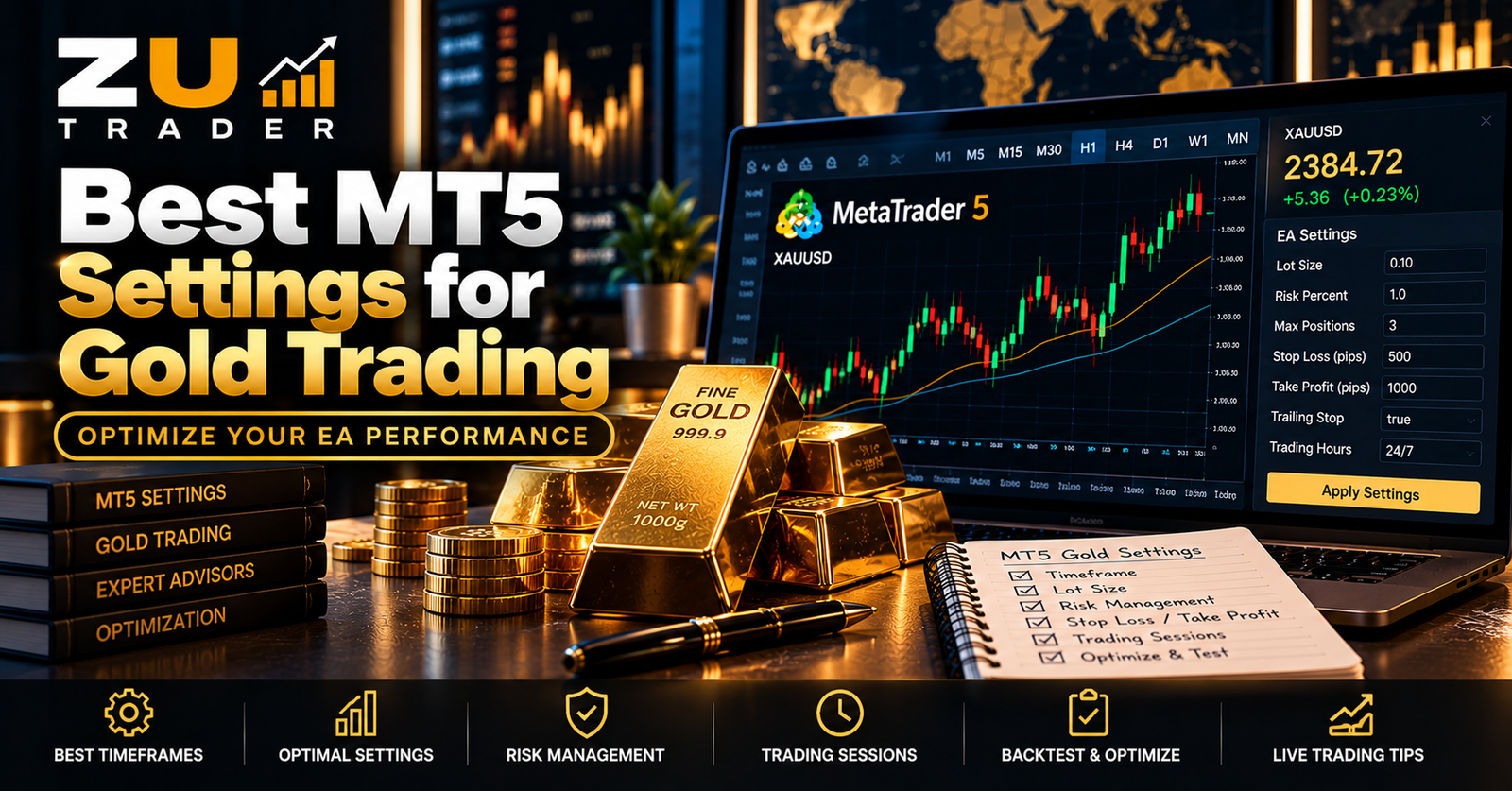
Best MT5 Settings for Gold Trading: How to Configure a Gold EA
Learn how to configure MT5 settings for automated Gold trading, including timeframe selection, position sizing, risk controls, trading sessions, backtesting, and Gold EA optimization.
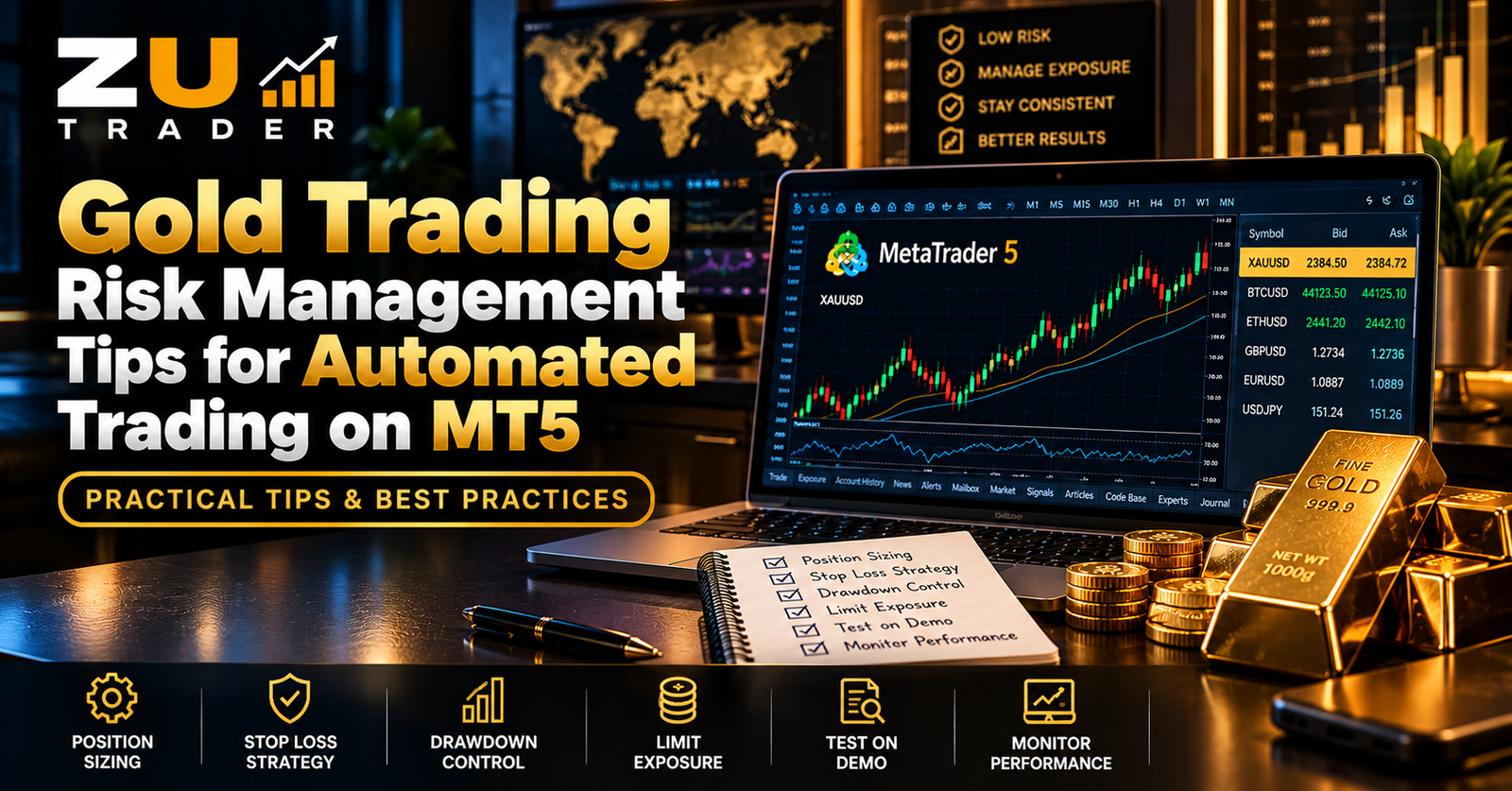
Gold Trading Risk Management: Tips for Automated Trading on MT5
Learn essential Gold trading risk management principles for MT5 automation, including position sizing, drawdown control, exposure limits, stop-loss logic, demo testing, and monitoring.
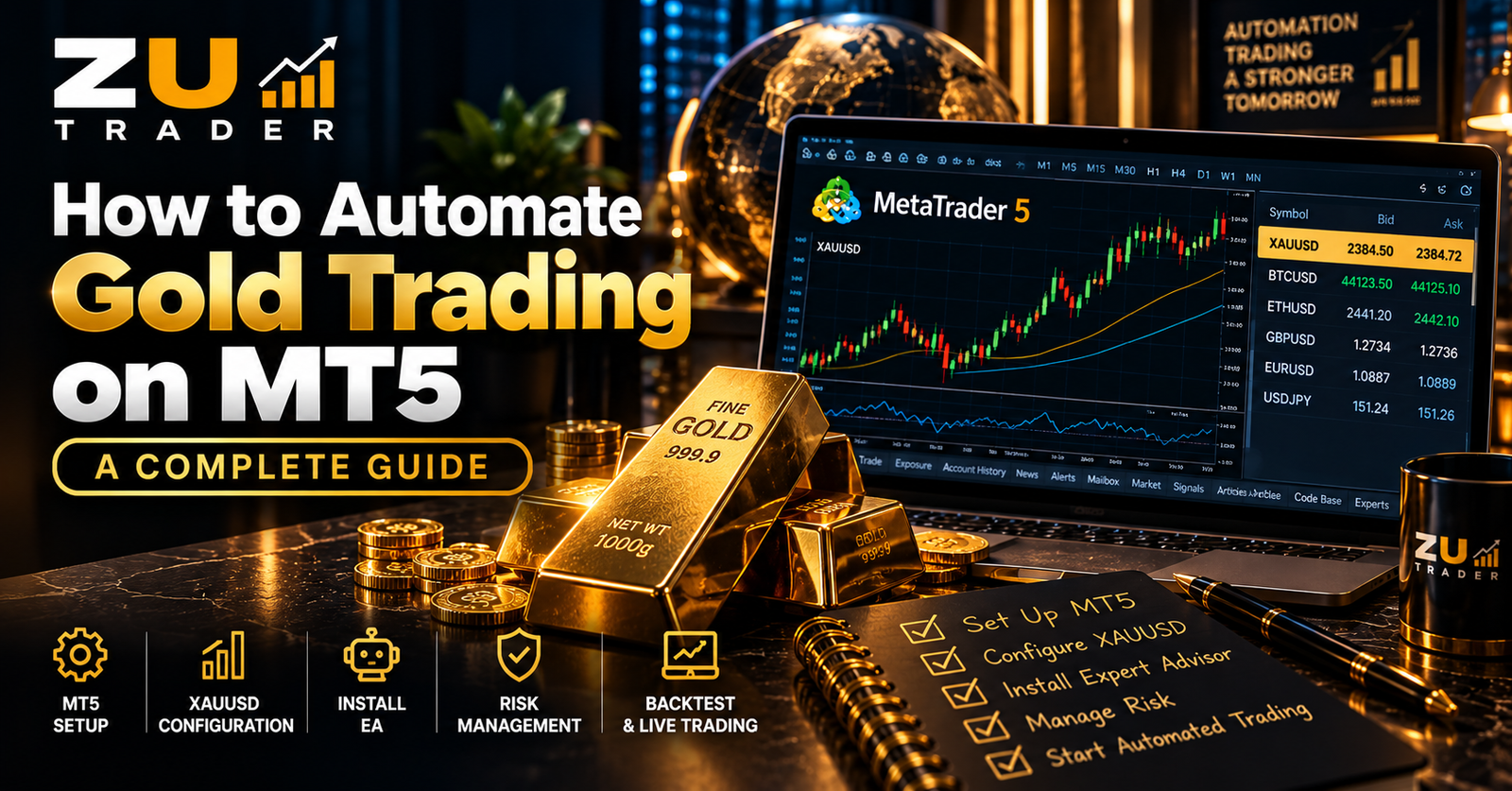
How to Automate Gold Trading on MT5: A Complete Guide
Learn how automated Gold trading works on MetaTrader 5, how Expert Advisors monitor XAUUSD, and what to consider when configuring, testing, and managing an MT5 Gold trading bot.