
Automated vs Manual Bitcoin Trading: What’s the Difference?
Compare automated and manual Bitcoin trading, including how each approach handles market analysis, trade execution, risk management, time commitment, consistency, and MT5 trading.
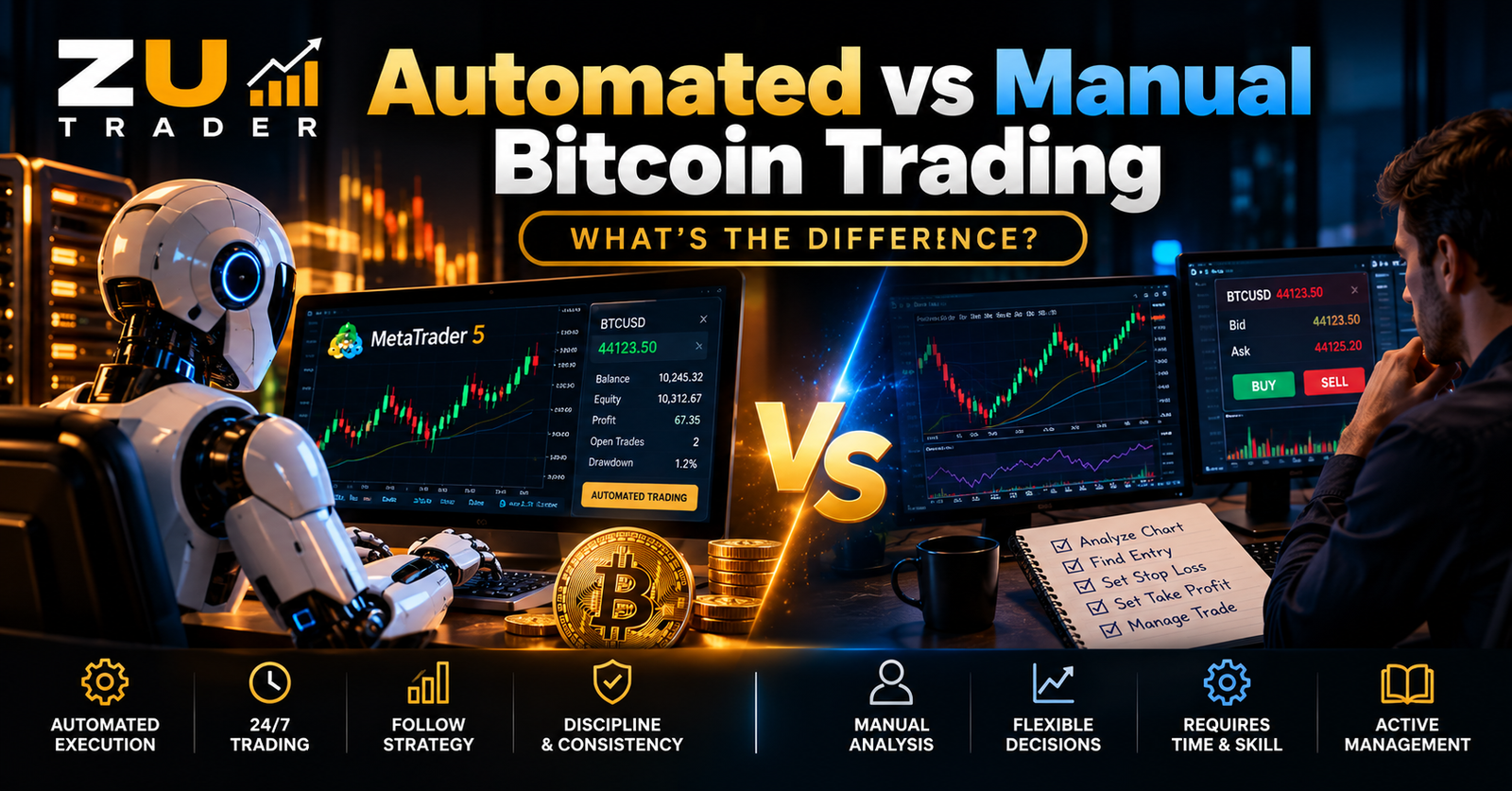
Bitcoin can be traded using different approaches. Some traders prefer to analyze charts and make every trading decision manually, while automated systems use predefined rules to monitor markets and execute programmed actions.
Both approaches have advantages, limitations, and risks.
Understanding the difference between automated and manual Bitcoin trading can help explain where Expert Advisors, MetaTrader 5, risk management, and human decision-making fit into the trading process.
This guide compares the two approaches without assuming that one method is automatically better than the other.
What Is Manual Bitcoin Trading?
Manual Bitcoin trading means that a person is directly responsible for analyzing market conditions and making trading decisions.
The trader may examine:
- Price charts
- Market structure
- Technical indicators
- Support and resistance
- Volatility
- Trends
- News and market events
- Existing positions
Based on that analysis, the trader decides whether to enter, manage, or close a position.
The trader is therefore actively involved throughout the decision-making process.
What Is Automated Bitcoin Trading?
Automated Bitcoin trading uses software to monitor market information and respond according to predefined rules.
On MetaTrader 5, this type of automation is commonly implemented through Expert Advisors, also known as EAs.
An automated system may be programmed to:
- Monitor Bitcoin prices
- Analyze predefined market conditions
- Identify potential entries
- Open positions
- Manage existing trades
- Apply stop-loss or take-profit logic
- Control position sizes
- Close trades when specific conditions occur
The exact behavior depends entirely on how the trading system has been designed.
For a detailed introduction, see our How to Automate Bitcoin Trading on MT5 guide.
Automated vs Manual Trading: The Main Difference
The main difference is who or what executes the trading logic.
In manual trading, a person evaluates the market and makes the final trading decisions.
In automated trading, software evaluates predefined conditions and performs the actions it has been programmed to perform.
Automation does not mean that human involvement disappears completely.
Someone still needs to configure, test, monitor, and maintain the automated system.
Market Monitoring
Manual Trading
A manual trader needs to actively monitor the market when looking for opportunities or managing positions.
This can require considerable time, especially in markets such as Bitcoin that operate continuously.
Automated Trading
An automated system can continuously evaluate market information while its trading environment remains operational.
This can reduce the need for someone to watch every price movement manually.
However, continuous monitoring by software does not mean every market movement will produce a trade.
The strategy should act only when its programmed conditions are satisfied.
Trade Execution
Manual traders place trades themselves after making a decision.
This provides direct control over each entry and exit, but execution depends on the trader being available at the required time.
An automated system can send trading instructions when its programmed conditions occur.
This can make execution more consistent with the predefined strategy.
Actual order execution can still be affected by factors such as broker conditions, spreads, liquidity, and slippage.
Trading Discipline
One potential advantage of automation is consistent rule execution.
Software does not become impatient, excited, or hesitant.
If a properly functioning EA has been programmed to wait for specific conditions, it can continue waiting until those conditions occur.
Manual traders have more discretion, but that discretion can sometimes lead to inconsistent decisions.
For example, a trader might change a decision because of emotion or react differently to similar market conditions.
That does not make automated decisions automatically correct. It simply means the system follows its programmed rules consistently.
Flexibility
Manual trading can provide greater immediate flexibility.
A person can examine unusual market conditions and decide not to trade even if a normal setup appears to exist.
They can also incorporate information that may not be included in an automated strategy.
Automated systems are limited to the logic they have been programmed to understand.
If an event falls outside those rules, the software cannot independently reason about it like a human analyst.
Time Commitment
Manual trading can require substantial time.
A trader may need to:
- Analyze charts
- Wait for setups
- Monitor positions
- Adjust orders
- Review market conditions
- Record trading activity
Automated systems can reduce some of these repetitive tasks.
Once correctly configured, an EA can monitor predefined conditions without requiring someone to continuously watch the chart.
However, automated trading still requires supervision.
Can Automated Trading Run 24/7?
An automated system can monitor markets for extended periods while MetaTrader 5 and the required trading environment remain operational.
If MT5 is closed or the computer loses connectivity, a locally running Expert Advisor may no longer be able to perform its programmed tasks.
This is one reason automated trading systems are sometimes operated on a VPS.
A VPS can provide a remote environment where MT5 can remain available without relying entirely on a personal computer.
Read our MT5 VPS Setup Guide for Automated Trading for more information.
Risk Management
Both manual and automated trading require risk management.
Manual Trading Risk Management
A manual trader is responsible for applying risk controls consistently.
These may include:
- Position sizing
- Stop losses
- Take-profit levels
- Maximum exposure
- Limits on simultaneous positions
The effectiveness of those controls depends partly on whether the trader follows them consistently.
Automated Trading Risk Management
An Expert Advisor can contain predefined risk-management rules.
Depending on its design, it may control:
- Position sizes
- Maximum positions
- Entry restrictions
- Stop-loss behavior
- Take-profit behavior
- Exposure
- Drawdown-related conditions
However, automated risk controls are only as effective as their design and configuration.
Our Bitcoin Trading Bot Risk Management Guide explains these considerations in more detail.
Emotional Decision-Making
Trading can involve psychological pressure, particularly during periods of rapid price movement.
Manual traders may experience:
- Fear
- Impatience
- Overconfidence
- Hesitation
- Pressure after losses
- Pressure after gains
An automated system does not experience these emotions.
It simply follows its programmed logic.
But removing emotion does not remove risk.
A strategy can consistently follow its rules and still generate losses if those rules perform poorly under current market conditions.
Strategy Consistency
Automation can be useful when a strategy requires the same conditions to be evaluated repeatedly.
For example, an EA can evaluate predefined criteria every time new market information becomes available.
A manual trader may interpret similar situations differently at different times.
This flexibility can sometimes be useful, but it can also make it harder to evaluate whether a strategy is being followed consistently.
Technical Knowledge
Manual and automated trading require different types of knowledge.
A manual trader may focus more heavily on:
- Chart analysis
- Market interpretation
- Trading psychology
- Decision-making
Someone operating an automated system may additionally need to understand:
- MetaTrader 5
- Expert Advisor configuration
- Broker compatibility
- VPS environments
- Software status
- Risk settings
- Testing
Users do not necessarily need to program an EA themselves, but they should understand how the system they are using is intended to behave.
What Is an Expert Advisor?
An Expert Advisor is software designed to operate inside MetaTrader.
An EA can monitor market data and perform programmed trading actions when predefined conditions occur.
Expert Advisors can range from simple systems using a small number of conditions to more complex systems containing several trading engines and risk-management rules.
Read How Expert Advisors Work on MetaTrader 5 for a complete explanation.
Testing Automated Strategies
One advantage of rule-based systems is that compatible Expert Advisors can be evaluated using the MetaTrader 5 Strategy Tester.
Backtesting can provide information about historical behavior, including:
- Number of trades
- Winning and losing trades
- Drawdown
- Profit factor
- Trade frequency
- Position behavior
However, backtesting should not be treated as a prediction of future performance.
Results can be affected by historical data, spread assumptions, configuration, execution assumptions, and the selected testing period.
Demo Testing
A demo account can help users understand how an automated system behaves in a simulated trading environment.
It can be useful for checking:
- EA installation
- Trade frequency
- Position sizing
- Entry behavior
- Exit behavior
- Broker compatibility
- Risk settings
- Platform stability
Demo conditions can differ from live conditions, so demo performance cannot guarantee future live results.
Can Manual and Automated Trading Be Combined?
The two approaches do not always have to be completely separate.
Some users may use automated software for repetitive market monitoring while still supervising the overall account.
Others may use automated systems on one strategy while analyzing other markets manually.
The important point is to understand which decisions are being automated and which remain under human control.
Automated Trading Advantages
Potential advantages of automation include:
- Continuous monitoring
- Consistent execution of programmed rules
- Reduced repetitive manual work
- Faster evaluation of predefined conditions
- Ability to backtest compatible strategies
- Reduced emotional interference in individual trade execution
These benefits do not guarantee profitable results.
Manual Trading Advantages
Potential advantages of manual trading include:
- Direct control over individual decisions
- Ability to interpret unusual situations
- Greater discretionary flexibility
- Ability to incorporate information outside a programmed model
- Immediate human judgment
These advantages also do not guarantee profitable results.
Limitations of Automated Trading
Automated systems have limitations.
They can be affected by:
- Poor strategy design
- Incorrect settings
- Technical failures
- Connectivity problems
- Broker incompatibility
- Unexpected market conditions
- Excessive risk configuration
This is why testing and monitoring remain important.
Limitations of Manual Trading
Manual trading also has limitations.
These can include:
- Time requirements
- Emotional decision-making
- Inconsistent execution
- Missed market conditions
- Slower processing of multiple conditions
- Difficulty monitoring markets continuously
The relative importance of these limitations depends on the individual trader and strategy.
Automated Bitcoin Trading With BTC Harvester
BTC Harvester is ZU Trader's automated Bitcoin trading system for MetaTrader 5.
It is designed to automate Bitcoin market monitoring and trade management using programmed trading engines and configurable controls.
Users should understand the software's settings, risk controls, trading environment, and intended behavior before using an automated system.
You can explore its features and licensing options on the BTC Harvester – Automated Bitcoin Trading Bot for MT5 page.
Which Approach Is Better?
There is no universal answer.
Automated trading may be useful for users who want predefined rules to handle repetitive market monitoring and execution.
Manual trading may appeal to those who prefer direct analysis and control over each decision.
The appropriate approach depends on factors such as:
- Strategy
- Available time
- Experience
- Technical knowledge
- Risk tolerance
- Preference for discretion or rule-based execution
Neither method removes trading risk.
Final Thoughts
Automated and manual Bitcoin trading represent two different ways of interacting with the market.
Manual trading places market analysis and execution directly in the hands of the trader.
Automated trading delegates predefined parts of that process to software such as MetaTrader 5 Expert Advisors.
Automation can provide consistent execution and continuous monitoring, while manual trading provides greater discretionary control and flexibility.
Neither approach guarantees better results.
Understanding the strategy, controlling risk, testing carefully, maintaining reliable infrastructure, and monitoring trading activity remain important regardless of which approach is used.
Automated and manual trading both involve financial risk. Historical performance, backtests, Expert Advisors, and trading strategies cannot guarantee future results.
Related Articles
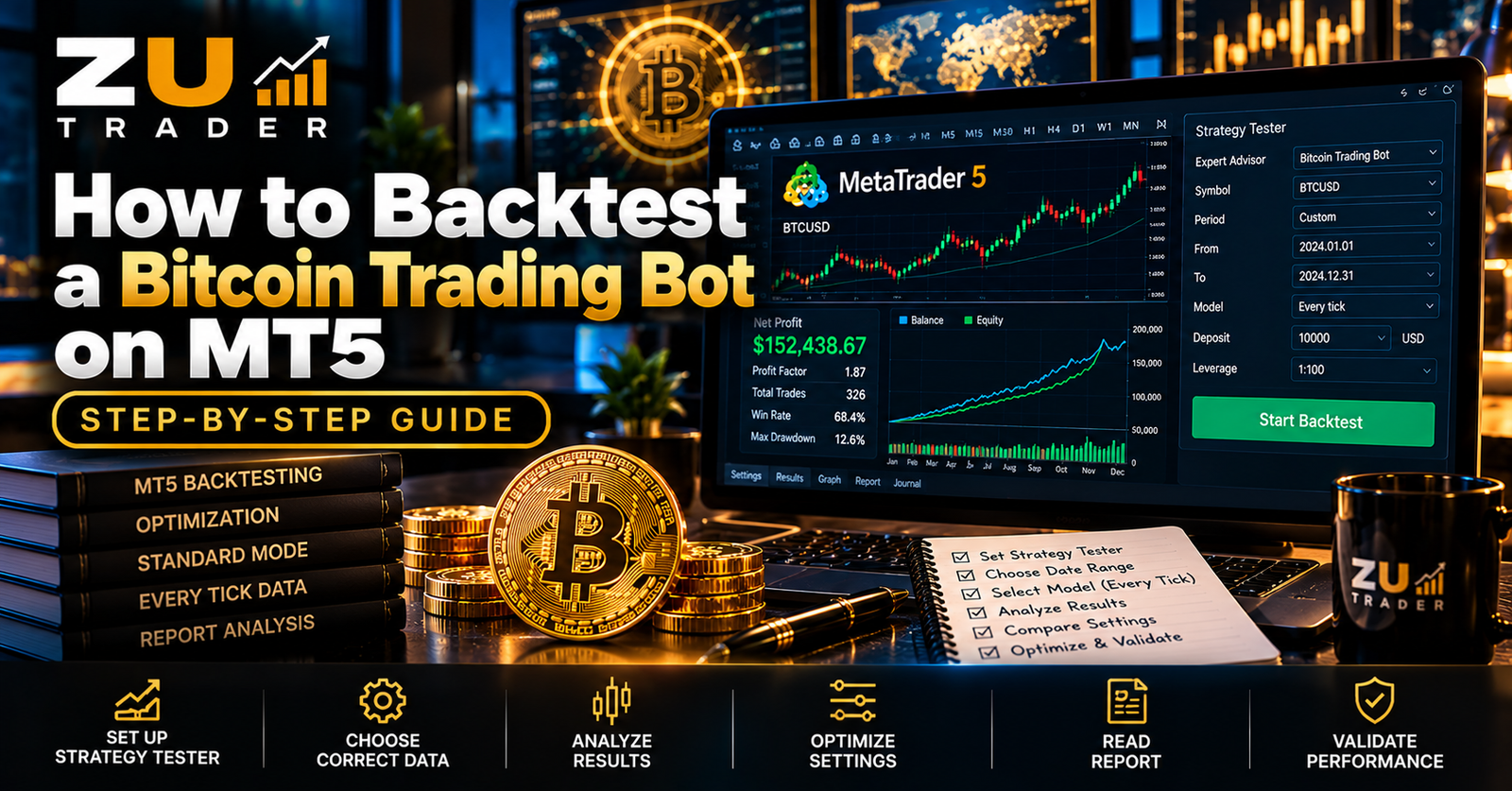
How to Backtest a Bitcoin Trading Bot on MT5: Step-by-Step Guide
Learn how to backtest a Bitcoin trading bot on MetaTrader 5 using the Strategy Tester, evaluate drawdown and profit factor, compare settings, and avoid common backtesting mistakes.
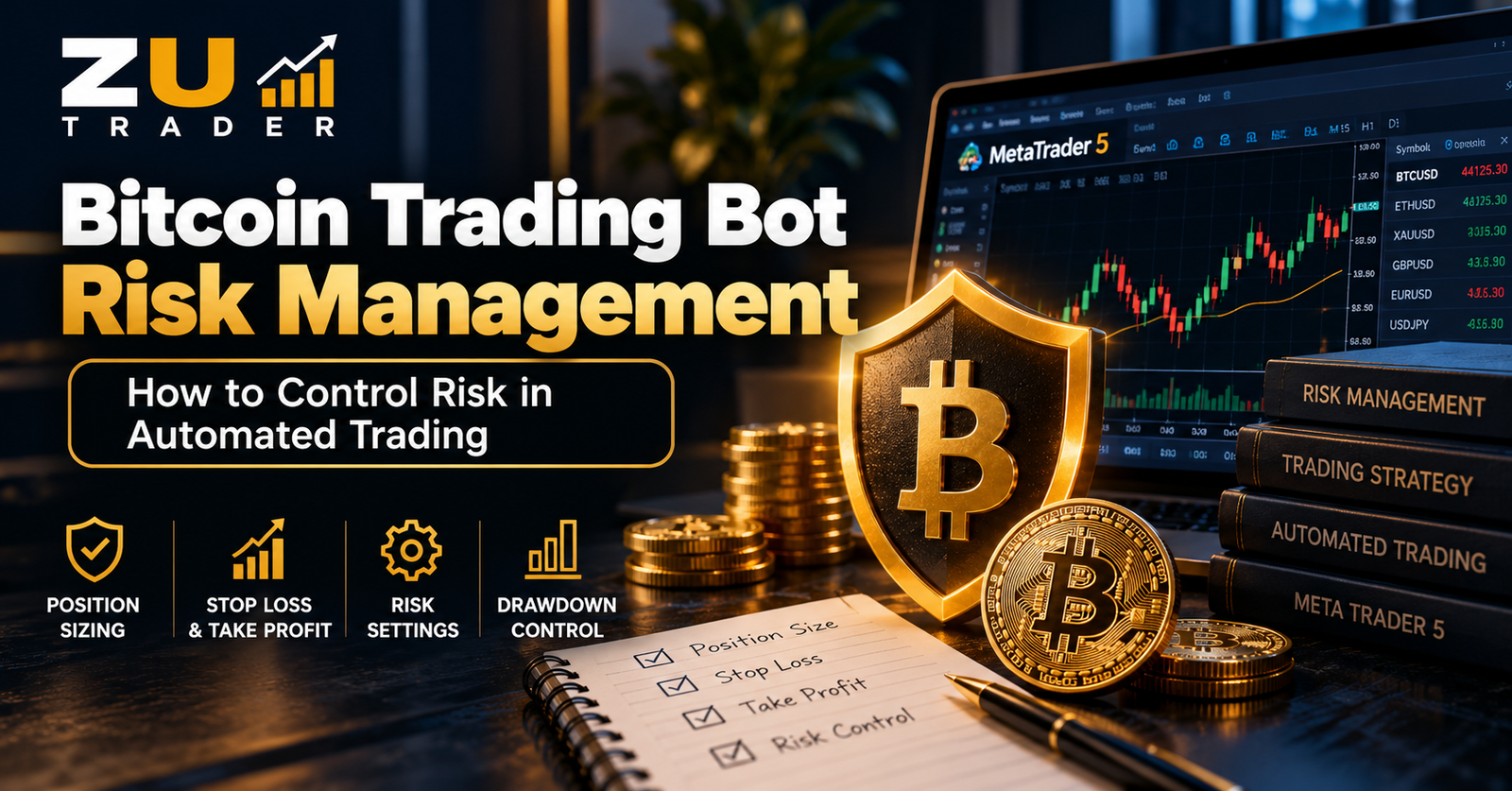
Bitcoin Trading Bot Risk Management: How to Control Risk in Automated Trading
Learn how risk management works in automated Bitcoin trading, including position sizing, drawdown control, stop-loss planning, exposure limits, and safer MT5 Expert Advisor testing.

How to Automate Bitcoin Trading on MT5: A Complete Guide
Learn how automated Bitcoin trading works on MetaTrader 5, how Expert Advisors execute trading strategies, and what to consider when choosing an MT5 Bitcoin trading bot.